Vibrating Screen for Chemical Powder Screening
News 2026-06-19
What Is the Best Vibrating Screen for Chemical Powder Screening?
Answer:
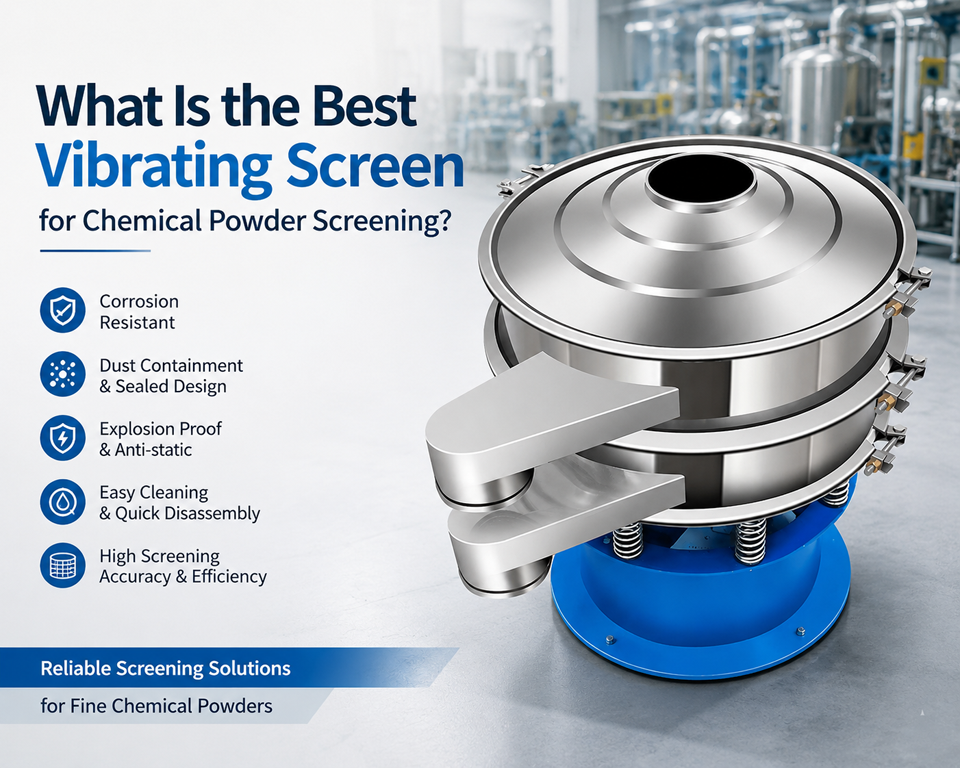
For most chemical powder applications, a rotary vibrating screen is the preferred choice because it provides high screening accuracy, flexible mesh configurations, and reliable handling of fine powders. However, unlike flour screening, chemical powder screening requires additional attention to corrosion resistance, dust containment, explosion protection, and contamination control.
Why Is Chemical Powder Screening Different from Flour Screening?
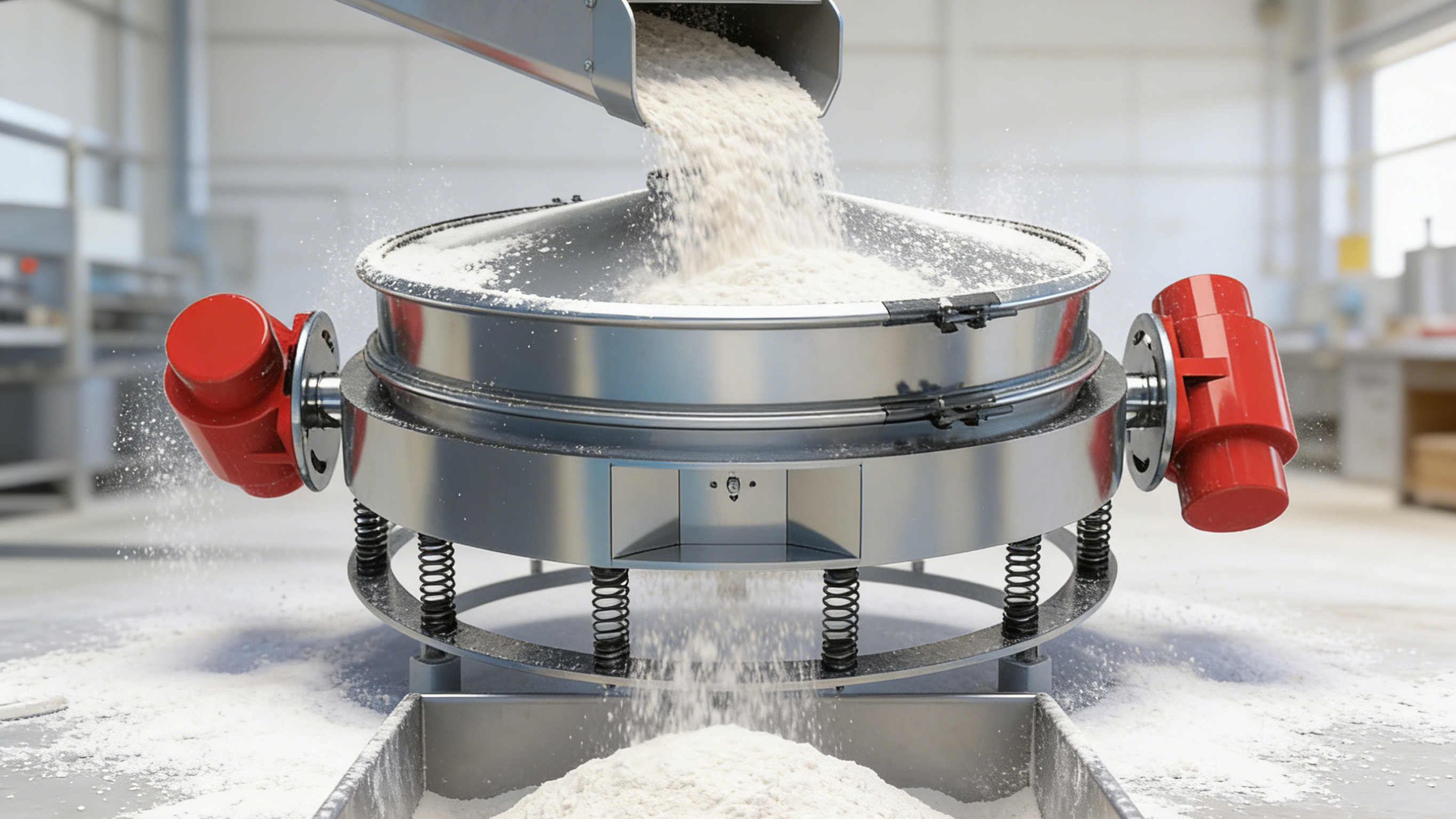
At first glance, flour and chemical powders seem to follow the same screening logic. Both often use rotary vibrating screens, mesh size is selected according to product specifications, and anti-blinding systems are important for maintaining efficiency.
But chemical powders introduce several critical challenges that cannot be overlooked.
1. Corrosion Resistance Comes First
Many chemical materials contain acidic, alkaline, or corrosive components. Choosing the wrong contact material can lead to equipment damage or product contamination.
For general applications, stainless steel is sufficient. However, aggressive materials may require 316L stainless steel or even non-metallic screening media such as nylon or polyester mesh. Understanding the material properties before selecting equipment is essential.
2. Dust Control Is More Important
Some chemical powders are sensitive to moisture and oxygen, while others may pose health risks if dust escapes into the workplace.
A fully enclosed rotary vibrating screen helps prevent material leakage, reduces environmental contamination, and protects product quality. For sensitive applications, additional negative-pressure or inert gas connections can be integrated into the system.
3. Explosion Protection Cannot Be Ignored
Many organic powders, sulfur-based materials, and polymer powders can form combustible dust clouds.
In these situations, explosion-proof motors, proper grounding, and anti-static designs become essential safety requirements. Selecting a screening solution that complies with local safety standards helps reduce operational risks.
4. Easy Cleaning Reduces Cross-Contamination
Fine chemical and pharmaceutical manufacturers often process multiple products on the same production line.
A quick-disassembly rotary vibrating screen allows operators to clean the machine efficiently between batches, reducing contamination risks and minimizing downtime.
5. Mesh Selection Still Matters
Just like flour screening, mesh size determines the final particle specification. If powders are prone to moisture absorption, agglomeration, or static buildup, ultrasonic deblinding systems often outperform traditional bouncing-ball cleaning methods and maintain consistent screening efficiency.
A Practical Screening Solution
In many chemical powder plants, a double-deck rotary vibrating screen provides an effective balance between capacity and accuracy. By combining enclosed construction, interchangeable screen meshes, and optional ultrasonic cleaning systems, manufacturers can achieve stable product quality while reducing maintenance requirements.
The right vibrating screen is not simply about separating particles—it is about protecting product quality, improving workplace safety, and supporting long-term production efficiency.
For companies handling fine chemical powders, selecting a properly configured rotary vibrating screen can make a significant difference in both product consistency and operational performance.